How to delegate it and get your time back
Company merch for HR and marketing in many companies starts innocently enough. A few sweatshirts for onboarding, bags for trade shows, T-shirts for an internal event. Over time, however, the scale grows, and with it chaos.
What was supposed to be an adjunct to HR or Marketing activities very often becomes a time-consuming operational project that blocks teams in their daily work.
If you feel that merch is “eating” too much of your team’s energy, this text is for you.
Where do you most often waste time when ordering merch?
From the outside, producing merchandise looks simple. In practice, it’s a lot of small decisions and processes that accumulate into one big burden.
The most common problems we see in companies:
- Continuous collection of needs from various departments
- repetitive orders of the same products
- Manual file corrections and keeping an eye on branding
- deadline pressure (“yesterday”)
- logistics: packaging, shipping, addresses, returns
- Lack of control over budgets and inventories
The result?
Instead of dealing with people, communication and strategy, HR and Marketing are putting out operational fires.
What solutions improve the handling of merchandise in an organization?
1. a fixed base of “core essentials”
Instead of reinventing products each time, the company has a set of proven, universal items:
- onboarding
- for partners
- for events
- for internal communication

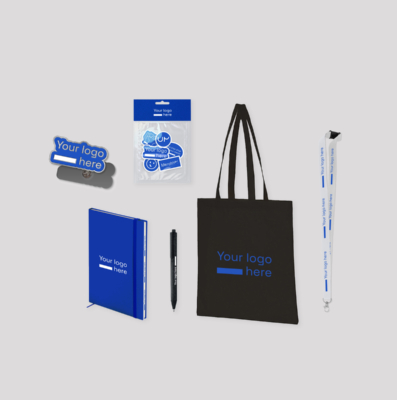
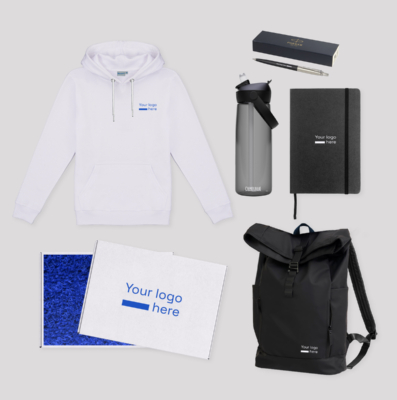
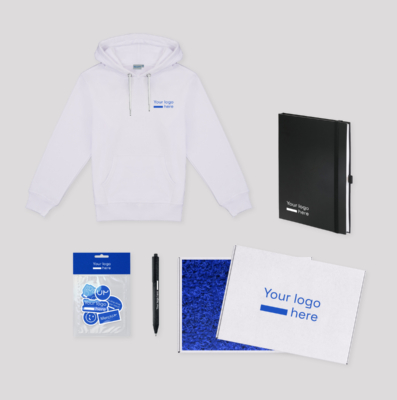
Products are always available and ready to use.
It is also worth using external storage if the supplier has it on offer.
2. one place to order
More and more companies are opting for a dedicated online merch store available only to the team or selected partners.
Such a store:
- simplifies procurement
- eliminates emails and files in attachments
- automates the approval process
- allows you to control budgets and availability
This solution works well in both large organizations where merch needs to be easily accessible to different teams and locations.
Learn how the company’s merchandise store works and how it organizes the ordering process
3. consistent branding without constant revisions
When products, files and guidelines are gathered in one place
- no need to check the logo every time
- no risk of “old version”
- Branding remains consistent, even with multiple orders
It is worthwhile for the supplier to receive a complete corporate identity file from you.
4. one responsibility instead of multiple tasks
In many companies, the problem is not the merch itself, but how it is created. When each department orders separately – HR, Marketing, Sales or Employer Branding, duplication, inconsistency and unnecessary costs quickly arise.
Instead of spreading the merch across several people and teams, it is worth planning and organizing the whole process together. A good starting point is a workshop with the supplier, where all departments involved work on one table.
Such a workshop makes it possible:
- bring together the needs of different teams in one place,
- establish a common product base and ordering rules,
- Sort out roles and responsibilities,
- avoid a situation where each department orders merch separately.
Only on this basis can the entire process be effectively outsourced to a single partner responsible for production, logistics and order processing.
The result?
HR and Marketing are back in their key roles, teams are working in one system, and merch is running in the background, exactly as it should.


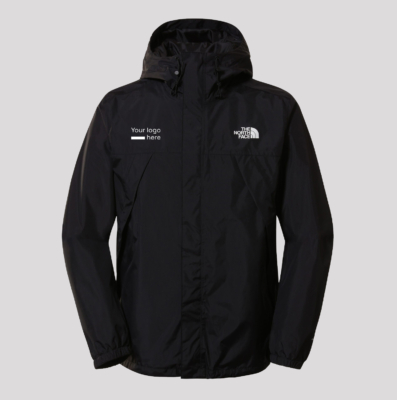
What does the company gain?
When delegating the production and handling of merchandise, companies most often notice:
- real time savings for teams
- fewer bugs and fixes
- predictable costs
- Faster action on events and onboarding
- Quieter work without the pressure of “on now”
Merch ceases to be an operational problem and begins to be a tool to support the organization’s culture and brand communication.
Merch that works systemically
If merch in your business:
- grows with the team
- involves more and more people
- and starts blocking HR or Marketing’s time
then you probably don’t need “another T-shirt,” just a better system.
A well-designed process, with a product base, one place to order and clear accountability makes a huge difference. Not only operationally, but also in the perception of the brand within the company.