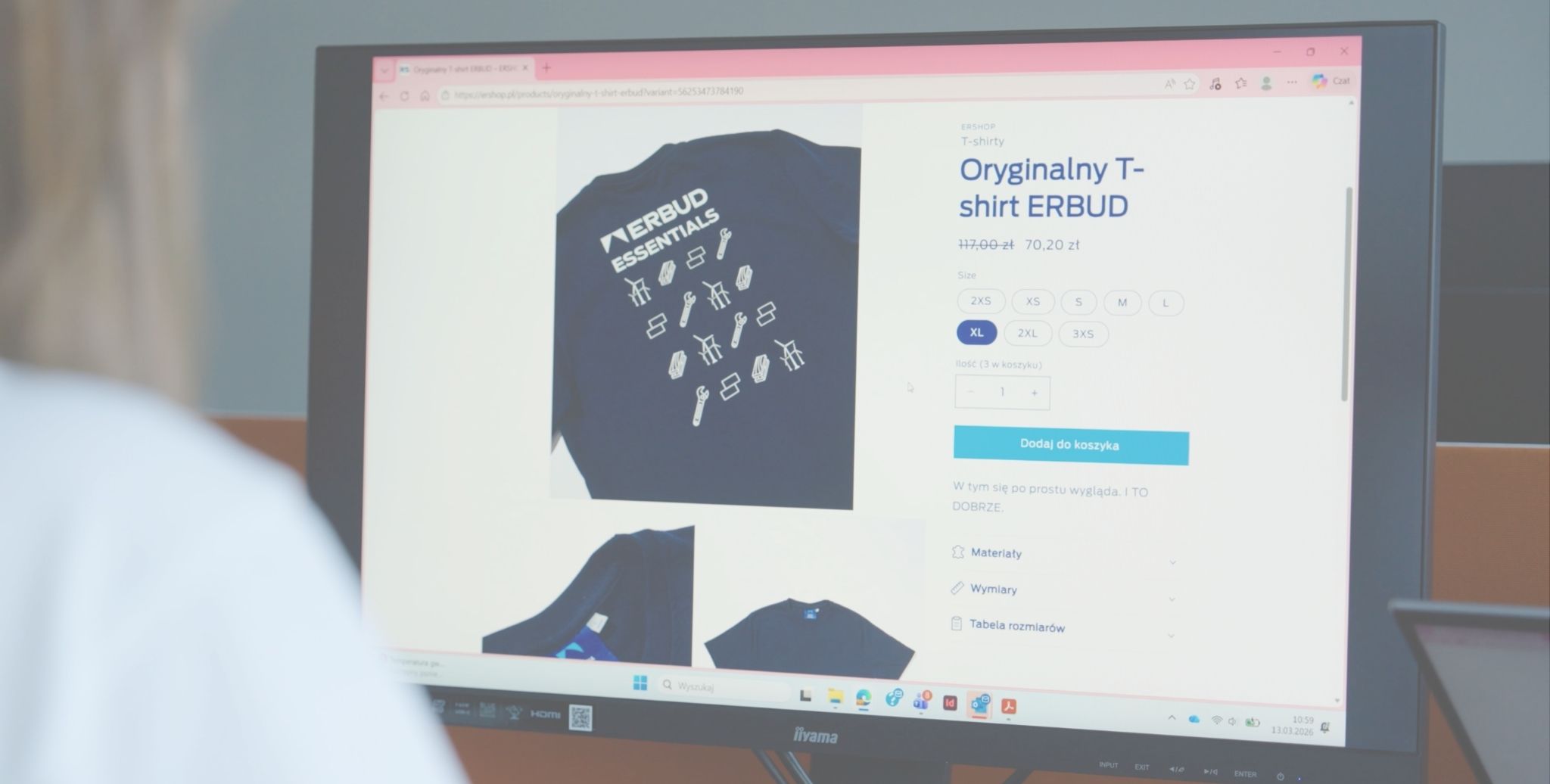
Merchandise management in a large organization quickly ceases to be just ordering goodies. It’s an operational activity that includes logistics, warehousing, distribution and ensuring a positive employee experience. ERBUD, one of the largest construction groups in Poland, faced just such a challenge. See how we jointly designed a system that relieves the burden on HR and marketing teams.
Analysis of customer needs and requirements
ERBUD is a distributed organization, with hundreds of employees, various office locations, construction sites and very dynamic projects. At this scale, the management of company products cannot happen by the way, but requires a dedicated system and a partner who will take responsibility for the entire process
Biggest challenges:
- lack of centralization
- dispersed suppliers
- manual order processing
- lack of inventory control

MerchUp (end-to-end) system approach
Together with ERBUD, we implemented an end-to-end approach in which MerchUp is responsible for the entire process:
- inventory and clean up of existing merchandise
- warehouse relocation and management
- design and production of new products
- implementation of a dedicated online platform (ERSHOP)
- handling orders and shipments
The result? Merch has ceased to be an operational problem and has become a structured system running in the background.
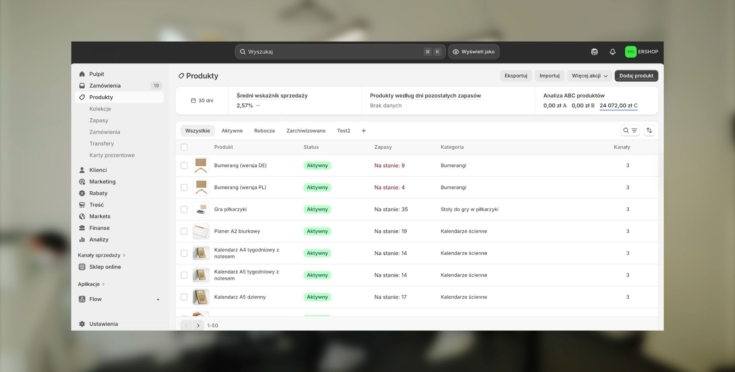
ERSHOP, or (un)ordinary merchandise store
The centerpiece of the solution is ERSHOP, a platform created by MerchUp that everyone can access. However, it is more than a classic store.
The system is designed to respond to the real needs of different users in the organization. On the one hand we have an open view for external recipients, on the other; an employee zone with preferential conditions. Then there’s the HR panel, which simplifies the ordering of welcome packs to one click.

What changes when merch starts acting like a service
In the case of ERBUD, merch has ceased to be a series of individual orders and has become a steady, predictable process. It is the approach of Gifting as a Service – model, in which everything runs in the background and scales with the company.
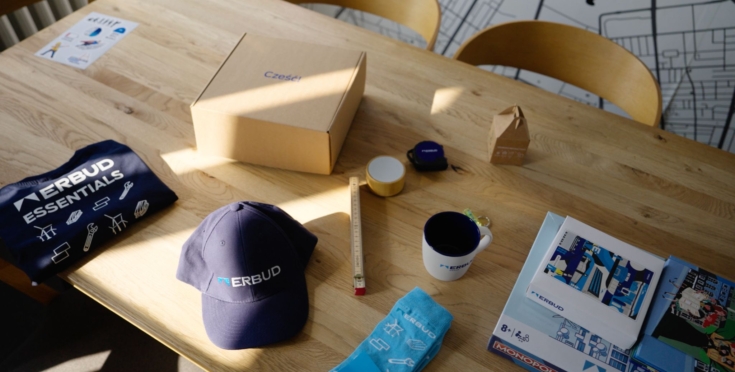
Employees have constant access to products, the organization maintains image consistency, and the whole system is ready for further development. In practice, this means one thing: less operational “run-of-the-mill”, more space for activities that realistically develop the organization.